Sculptures in coastal environments play a significant role in elevating the architectural identity of a project—whether in luxury residences, resorts, or hospitality developments. However, coastal conditions are classified as highly corrosive environments, directly impacting material performance, surface quality, and long-term maintenance costs.
Understanding the effects of sea air is therefore essential in the design, material selection, and planning of outdoor sculptures—particularly for projects located near the coastline.
What Is Sea Air?
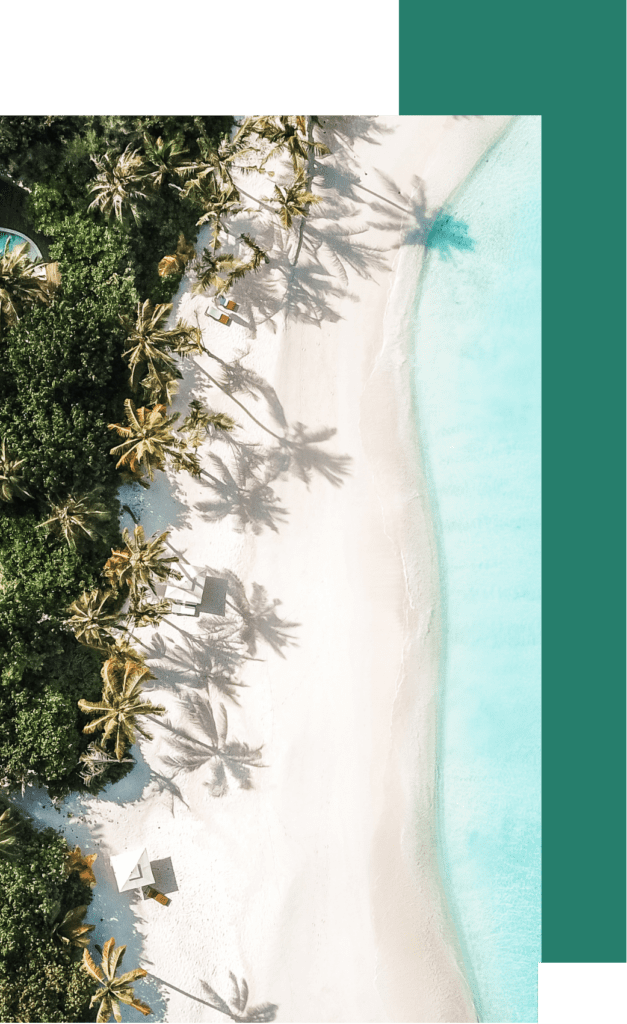
Sea air refers to the atmospheric conditions found in coastal areas, characterized by the presence of:
Salt aerosols, primarily sodium chloride (NaCl)
Chloride ions (Cl⁻), which accelerate corrosion in metals
High and consistent humidity levels
Strong UV radiation exposure
Wind-driven salt deposition on surfaces
These elements combine to create an environment that continuously interacts with exposed materials. Importantly, the effects of sea air can extend several kilometers inland, meaning projects not directly on the shoreline may still be significantly affected.
Material deterioration in coastal environments is driven by several concurrent mechanisms:
1. Electrochemical Corrosion
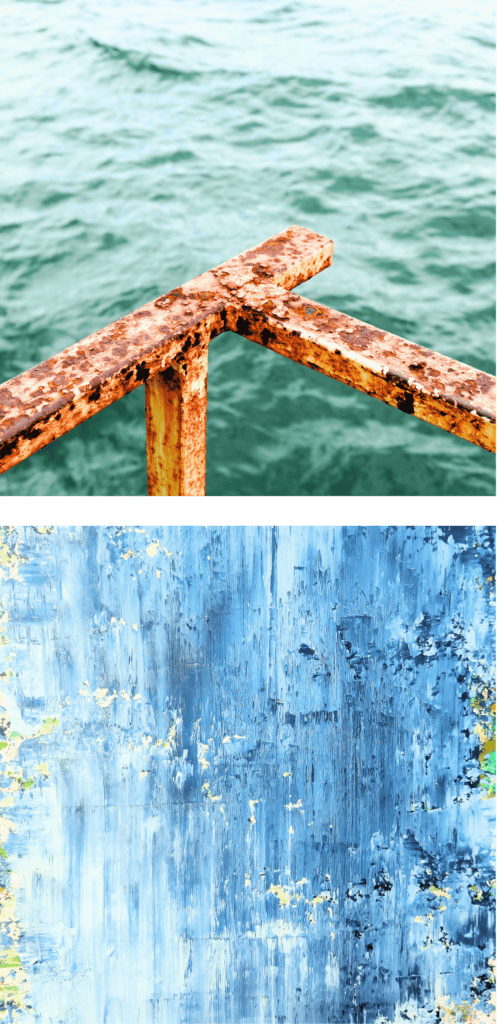
Salt combined with moisture forms an electrolyte layer on material surfaces, enabling electron transfer and initiating corrosion processes in metals.
2. Chloride-Induced Pitting
Chloride ions can break down the protective passive layer of metals such as stainless steel, leading to localized pitting corrosion that is often difficult to detect in early stages.
3. UV Degradation
Ultraviolet radiation degrades polymer structures in coatings, resins, and gel coats, resulting in:
Fading
Surface chalking
Micro-cracking
4. Moisture Penetration
Moisture can infiltrate material layers, causing delamination and internal structural degradation over time.
CASE STUDY: VEHHA HUAHIN LUXURY SEAVIEW CONDOMINIUM
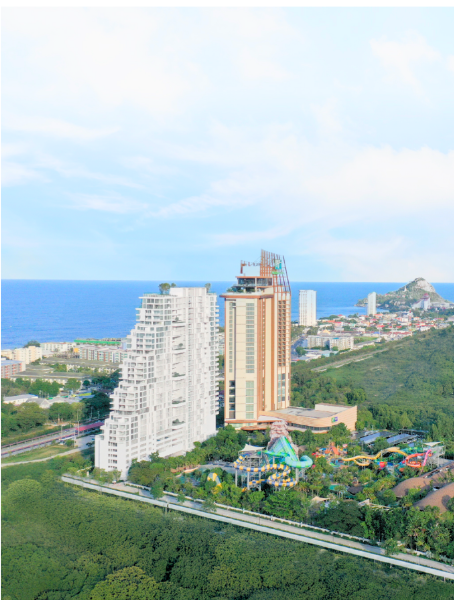
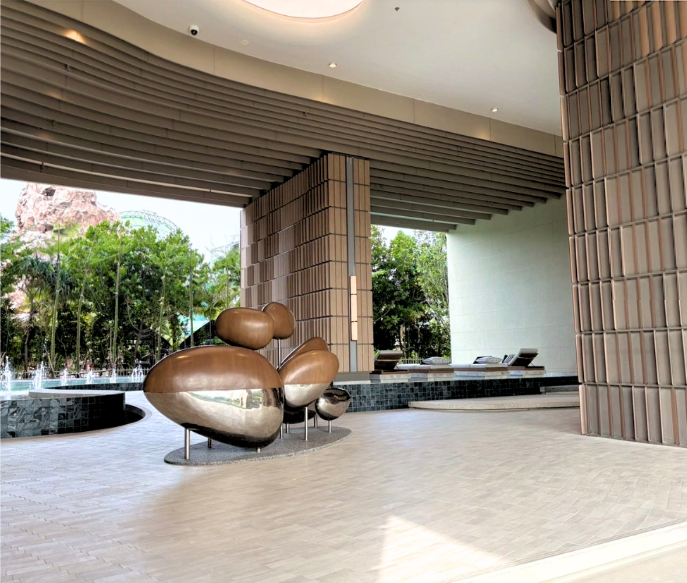
The Vehha Huahin Luxury Seaview Condominium, located at Khao Takiab Beach in Hua Hin, provides a clear example of a material strategy designed specifically for coastal conditions.
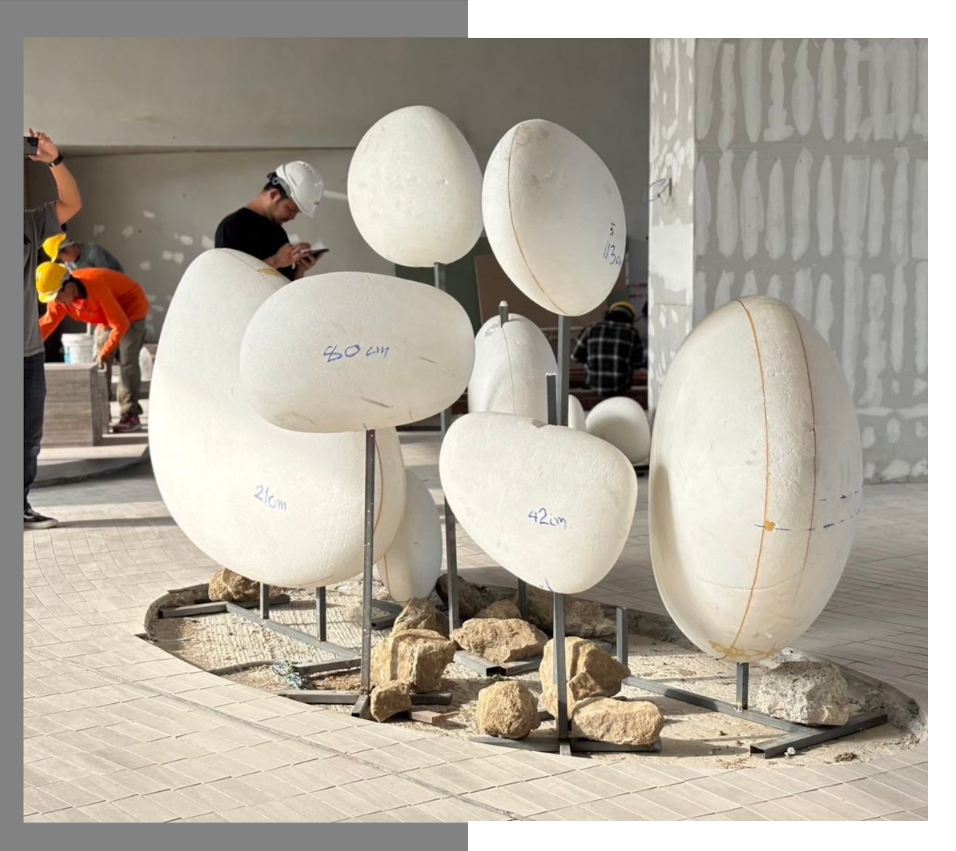
For this project, Object Nine implemented a material integration approach, selecting different materials based on environmental exposure and functional requirements:
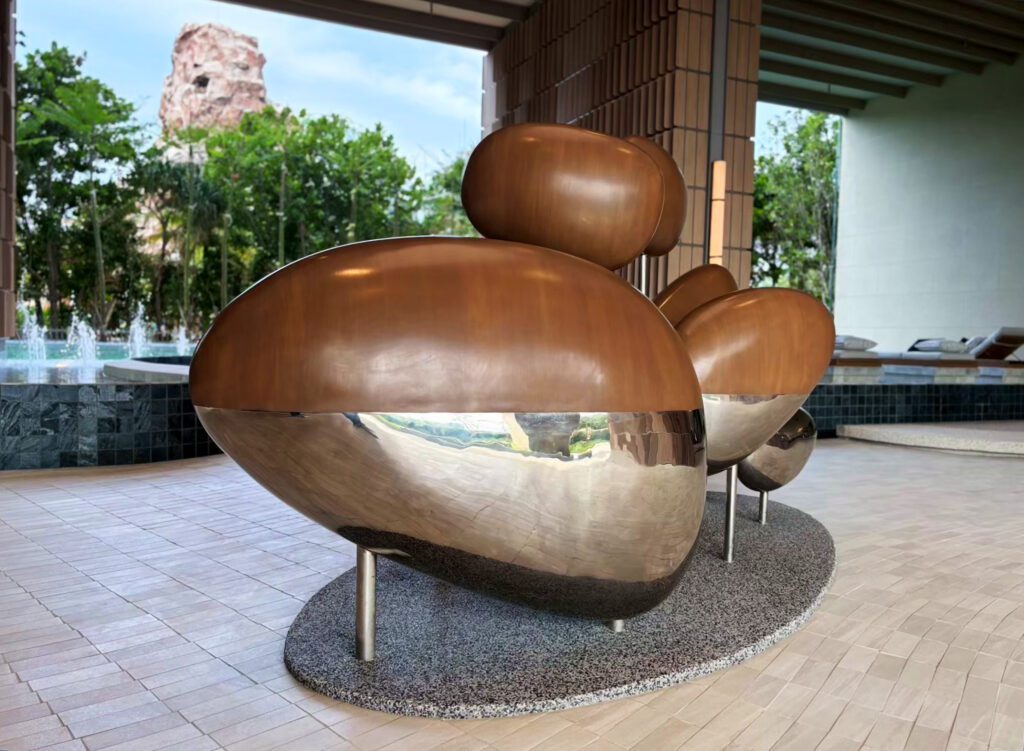
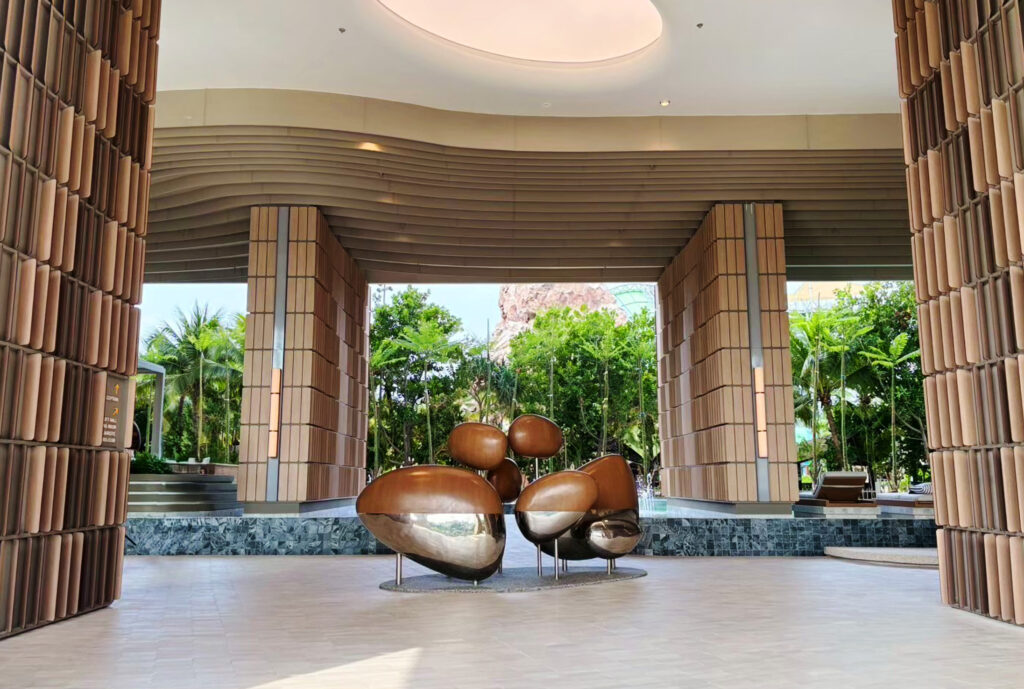
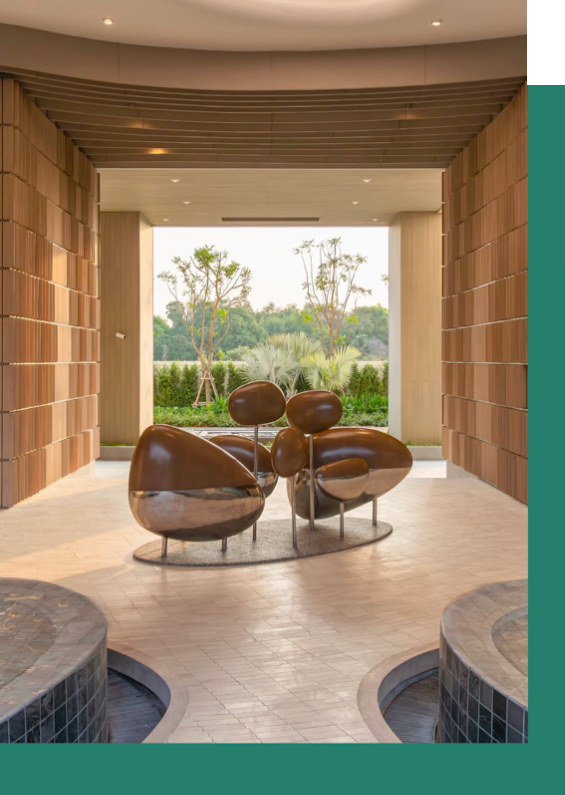
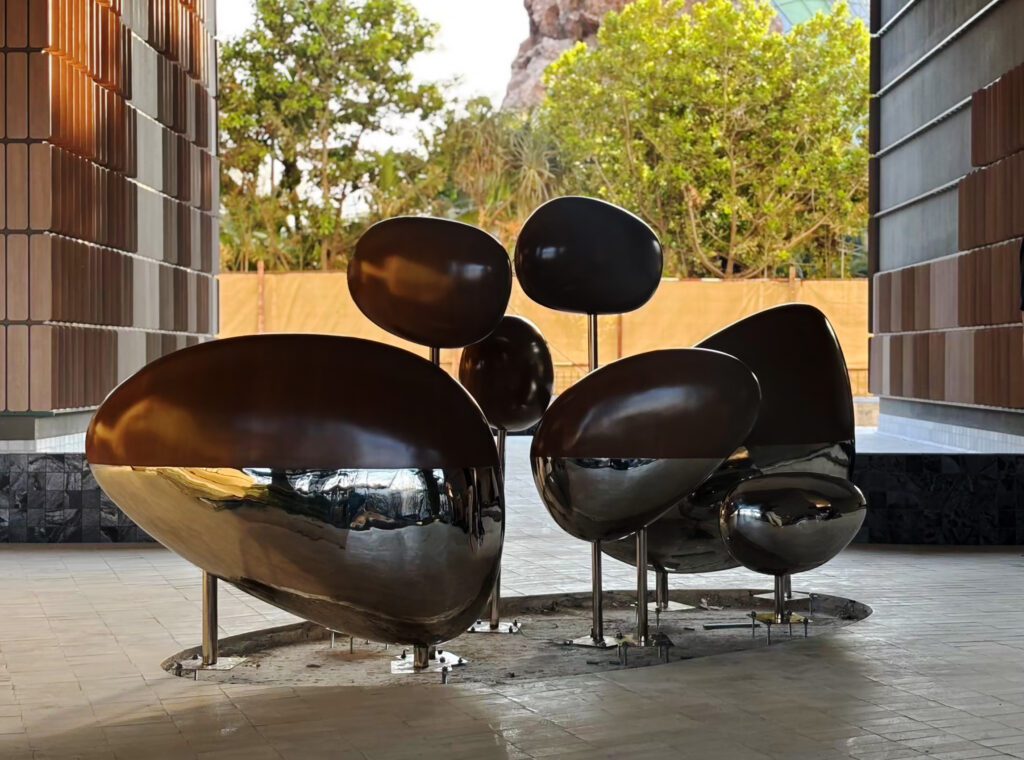
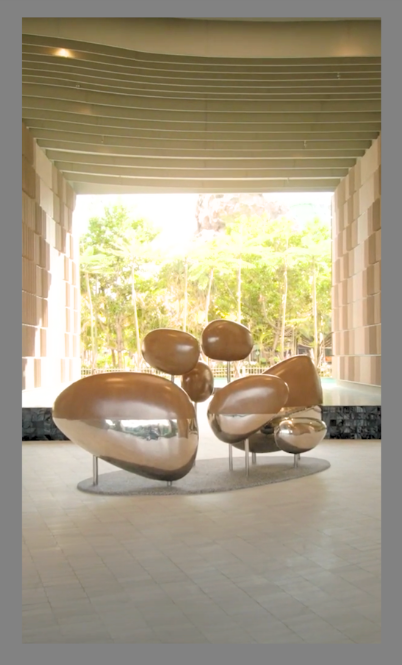
The primary sculptural form was fabricated using fiberglass, finished with a wood-grain texture. This allowed for design flexibility while achieving a warm, natural aesthetic aligned with the surrounding architecture.
The lower section, which is directly exposed to the coastal environment, was constructed using 316 stainless steel (marine grade).
The composition was carefully aligned with the natural sea level of Hua Hin’s shoreline, reducing areas where moisture and salt could accumulate.
This approach reflects a balance between aesthetic integration and long-term durability, ensuring both visual impact and structural performance.
If you have a project in mind, or are planning a sculpture for a coastal environment, We warmly welcome you to visit our studio to experience our materials, craftsmanship, and production process firsthand.
Our team is available to support you from concept development and material selection to long-term durability planning.
We look forward to the opportunity to collaborate and create something exceptional with you.
Tel (Sales): (+66) 092-826-1798 E-mail: Mail@ObjectNine.co.th For international clients: Hello@MerryWeekend.com
Stay Connected
Follow Object Nine for more work and inspiration:
Facebook | Instagram | TikTok
*All images in this blog post are the intellectual property of Object Nine. Any reproduction, distribution, or use without written permission is strictly prohibited.