
NATURAL WIND AND ITS IMPACT ON THE DESIGN
AND INSTALLATION OF OUTDOOR SCULPTURES
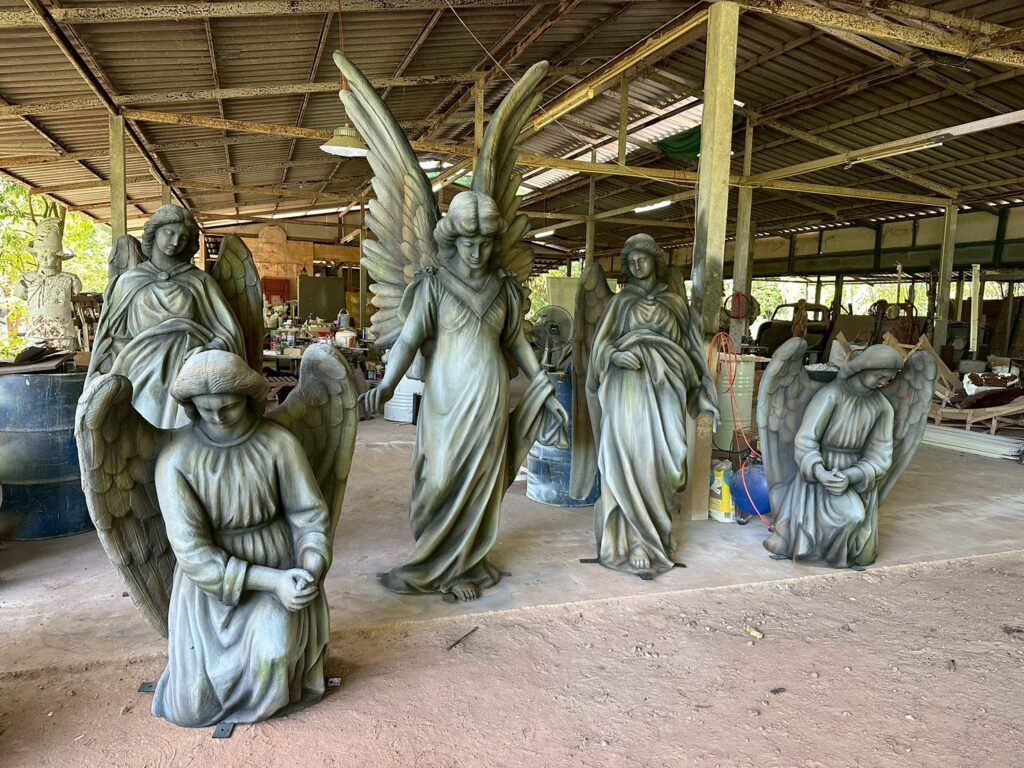
Outdoor sculptures are artistic creations designed to be exhibited in open-air spaces, such as public parks, plazas, community areas, or building forecourts. Beyond considering artistic beauty, core concepts, and harmony with the surroundings, environmental factors play a crucial role in the stability and longevity of the artwork. “Wind,” in particular, is a powerful natural force that directly affects sculptural structures. If not properly accounted for, it can lead to damage to the artwork, surrounding property, and public safety.
Consequently, designing and installing outdoor sculptures requires a comprehensive study of wind loads—including form, materials, structural engineering, and anchoring methods—to ensure the artwork remains safe, stable, and sustainable in its real-world environment.
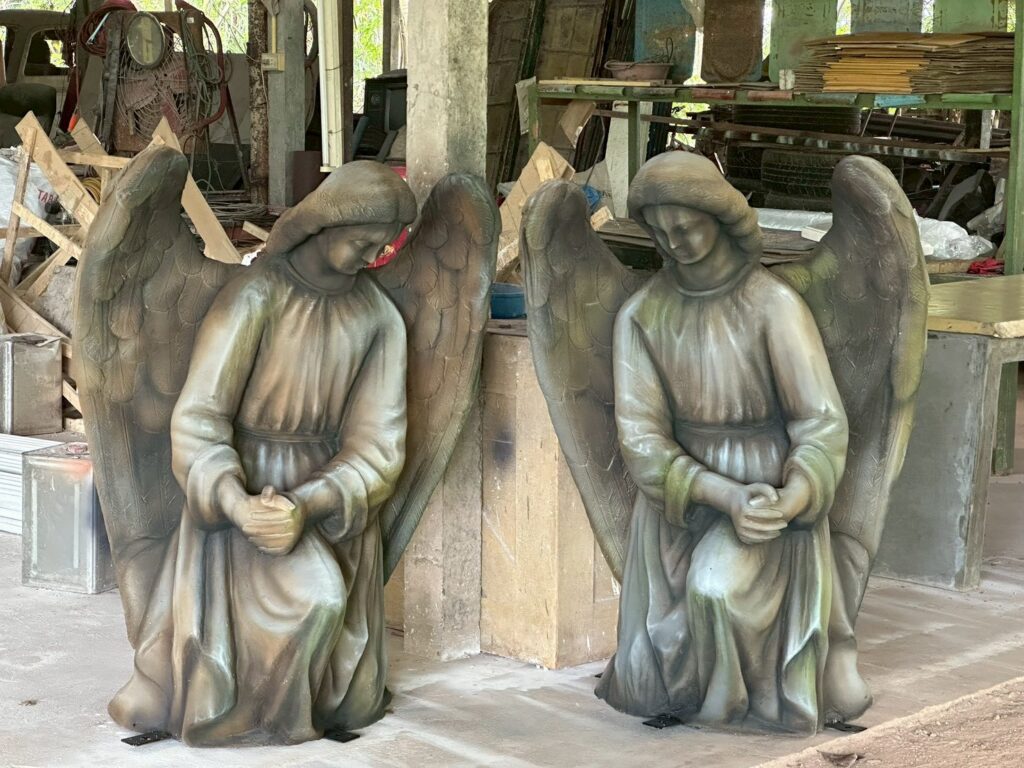
THE IMPACT OF WIND ON OUTDOOR SCULPTURES
Wind is the movement of air masses that exerts physical forces on objects. When wind currents strike a sculpture, they generate pressure and suction from various directions, depending on wind speed, geometry, and installation location. These forces can cause structural vibration, twisting, or displacement.
Sculptures that are large or have expansive surface areas—such as large sheet metals, flat shapes, or tall, slender structures—are significantly more vulnerable to wind loads than compact, aerodynamic forms. In extreme cases, high-velocity winds from storms or monsoons can generate forces that exceed structural capacity, leading to cracking, detaching from the base, or catastrophic structural failure.
Furthermore, wind can induce resonance. When the frequency of the wind aligns with the natural frequency of the structure, it causes severe, amplified vibrations, leading to long-term fatigue and accumulated structural damage.
GEOMETRIC DESIGN
FOR WIND MITIGATION
The form and geometry of a sculpture are critical factors determining the wind loads exerted on the artwork. Designers must integrate aerodynamic principles alongside their artistic concepts.
Sculptures with curved or streamlined surfaces allow air to flow smoothly around them, significantly reducing drag and pressure. Conversely, large flat shapes or solid, opaque walls experience much higher wind loads due to their expansive frontal surface area.
Another effective approach is incorporating openings, perforations, or open-work elements within the structure to allow wind to pass through. This technique minimizes pressure accumulation on the artwork’s surface and alleviates the overall load on the internal structure. Examples include perforated metal sculptures or structures composed of spaced-out components.
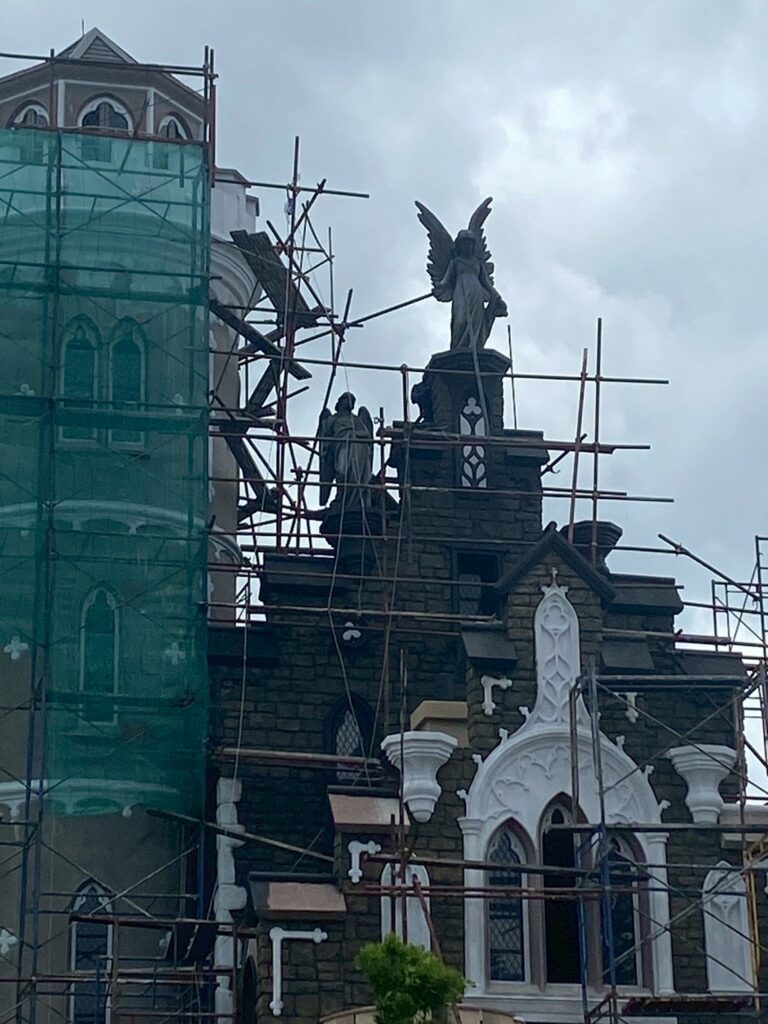
MATERIAL SELECTION AND STRUCTURAL SYSTEMS
Materials selected for outdoor sculptures must withstand external environmental conditions and effectively resist wind loads. Commonly used materials include steel, stainless steel, aluminum, concrete, and natural stone—each offering unique advantages and limitations:
Steel and Stainless Steel: Offer high tensile strength, making them ideal for large-scale installations that bear heavy wind loads.
Aluminum: Lightweight and corrosion-resistant, but requires internal structural reinforcement to prevent buckling or deflection.
Concrete and Natural Stone: Provide substantial self-weight, enhancing basal stability, but require careful consideration regarding weather-induced cracking.
From a structural perspective, engineers and designers must collaborate to develop an optimized load-bearing system. This may involve internal steel framing, bracing systems, or balanced weight distribution to ensure the sculpture can safely withstand wind forces from any direction.
THE IMPORTANCE OF FOUNDATIONS AND INSTALLATION
No matter how robustly a sculpture is designed, a lack of foundational stability can lead to tilting or structural collapse—particularly in areas consistently exposed to high-velocity winds.
Foundation design must meticulously account for the sculpture’s self-weight, total wind-catching surface area, soil conditions, and the microclimate of the installation site. Foundations typically utilize reinforced concrete embedded deep into the ground or high-strength anchoring bolt systems connected directly to the primary structural framework.
Prior to actual installation, rigorous engineering calculations must be conducted to evaluate the maximum potential wind loads at the site. This includes load testing on all connection points and anchors to preemptively mitigate any future structural failure.
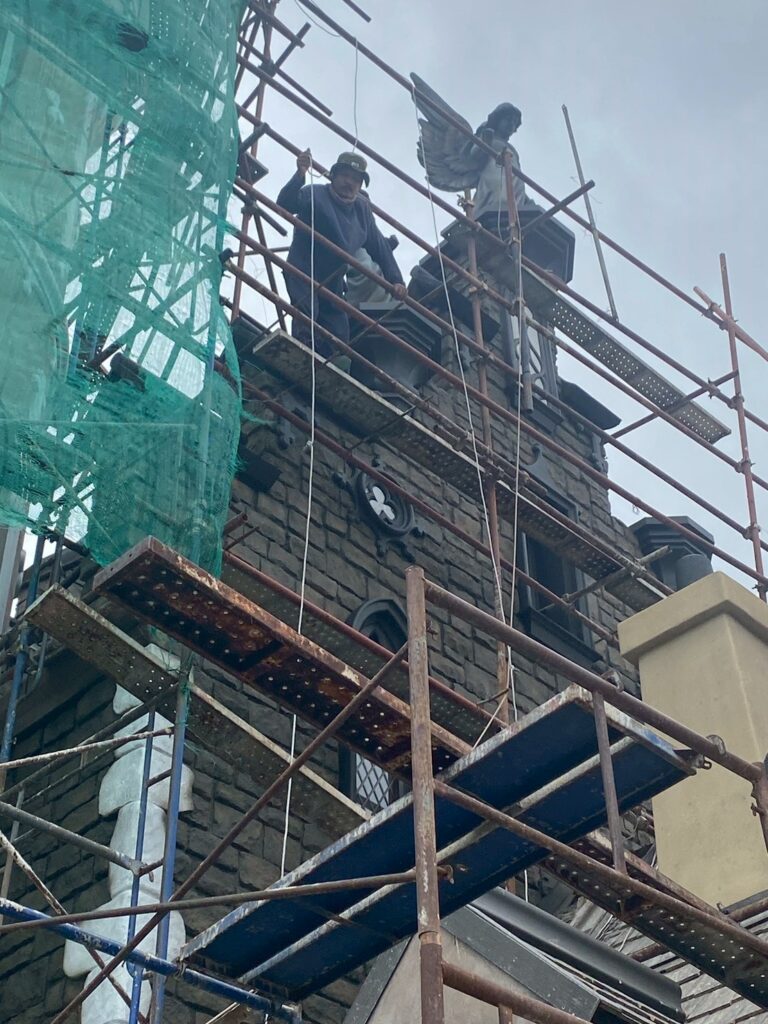
SITE ENVIRONMENTAL ANALYSIS
The physical characteristics of the installation site significantly alter wind behavior. Open coastal areas, mountain crests, or urban canyons between high-rise buildings often experience substantially higher wind speeds than typical landscapes. Furthermore, surrounding buildings and structures can deflect wind directions and create turbulent vortexes that exert unpredictable forces on the sculpture.
Conducting a thorough site survey prior to installation is therefore a critical phase. Designers should study local meteorological data, seasonal wind directions, and average wind speeds, alongside assessing risks from storms or extreme weather events. This data is essential for optimizing both the structural design and the precise placement of the artwork.
Today, advanced computational fluid dynamics (CFD) software is widely utilized to simulate airflow and wind pressure around structures. This technology allows engineers and designers to predict potential aerodynamic impacts with a much higher degree of accuracy.
Conclusion
Wind is a powerful natural element that exerts a profound influence on the design and installation of outdoor sculptures, directly impacting their structural stability, public safety, and overall lifespan. Successful public art development requires a holistic design approach—one that harmonizes aesthetic form, material selection, structural engineering, foundational stability, and site-specific environmental conditions.
By seamlessly integrating artistic vision with engineering expertise and environmental science, outdoor sculptures can transcend pure aesthetic value. They become resilient, safe, and enduring landmarks that enrich public spaces sustainably for generations to come.