
The Science Behind Large-Scale Sculpture Fabrication
From Imagination to Monumental Art: The Synergy of Art, Engineering, and Manufacturing Technology
Large-scale sculptures produced by Object Nine are not merely works of art created for aesthetic appeal; they serve as vital elements that establish a location’s identity, reflect a project’s character, and transform ordinary spaces into memorable landmarks. These include sculptures situated in front of hotels, shopping centers, office buildings, real estate developments, public parks, or major city landmarks.
However, behind the majestic and flawless appearance of these large-scale sculptures lies a workflow that is vastly more complex than general art creation. Scaling up a small maquette into a multi-story physical masterpiece requires multidisciplinary expertise spanning art, design, structural engineering, materials science, manufacturing technology, and project management.
The core challenge lies in preserving the artist’s aesthetic vision while ensuring the structure remains robust, safe, weather-resistant, and feasible for on-site installation. This article will guide you through the behind-the-scenes techniques of large-scale sculpture production—from the genesis of an idea to the day the artwork is finally unveiled to the public.
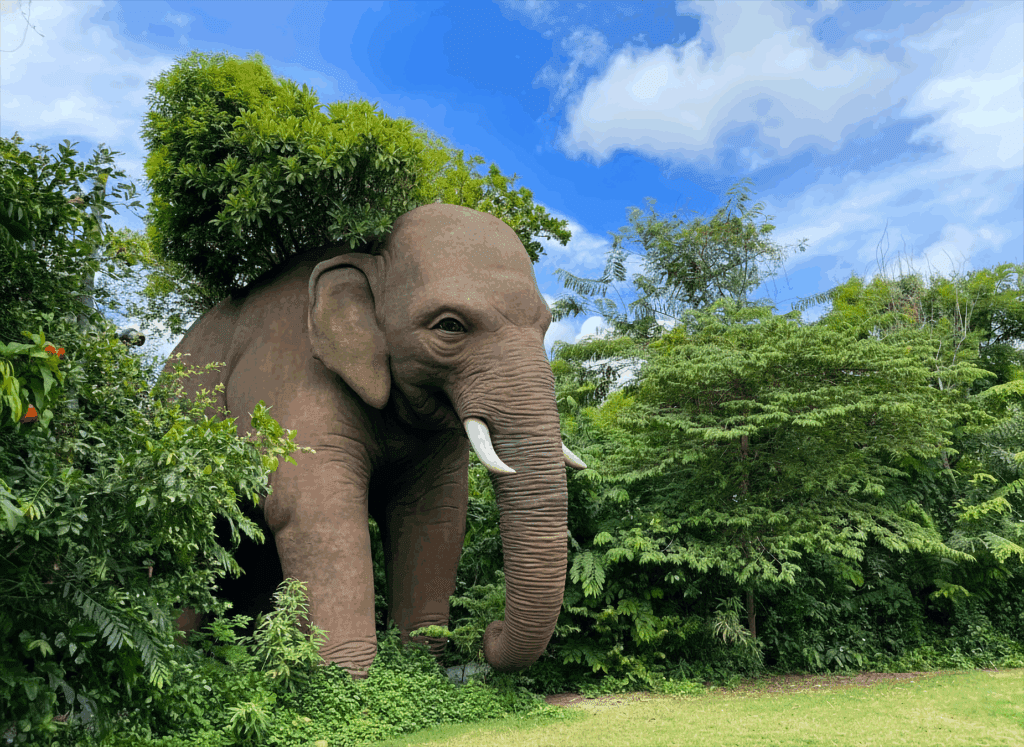
1.From Artistic Vision to Technical Design
From Artistic Vision to Technical Design
The genesis of creating a large-scale sculpture begins with an artistic concept, which may stem from the artist’s imagination, cultural narratives, the unique identity of a location, or the core theme of a project.
At this stage, designers must look beyond mere shape and aesthetics, taking into account scale, proportions, viewing angles, line of sight, installation positioning, and the spatial relationship between the sculpture and its surrounding architecture. Once a clear concept is established, the process transitions to technical design to transform sketches or mock-ups into actionable production data.
3D modeling and Computer-Aided Design (CAD) technologies play a crucial role in this phase, enabling designers to build three-dimensional forms, specify dimensions, verify proportions, and precisely refine the details of the artwork. Furthermore, 3D visualization technology allows project owners, architects, and the production team to preview the artwork in its actual environment prior to manufacturing, minimizing discrepancies between the initial concept and the finished piece.
The core essence of this stage is to preserve the artistic identity as much as possible while engineering the design to comply with structural and manufacturing limitations.
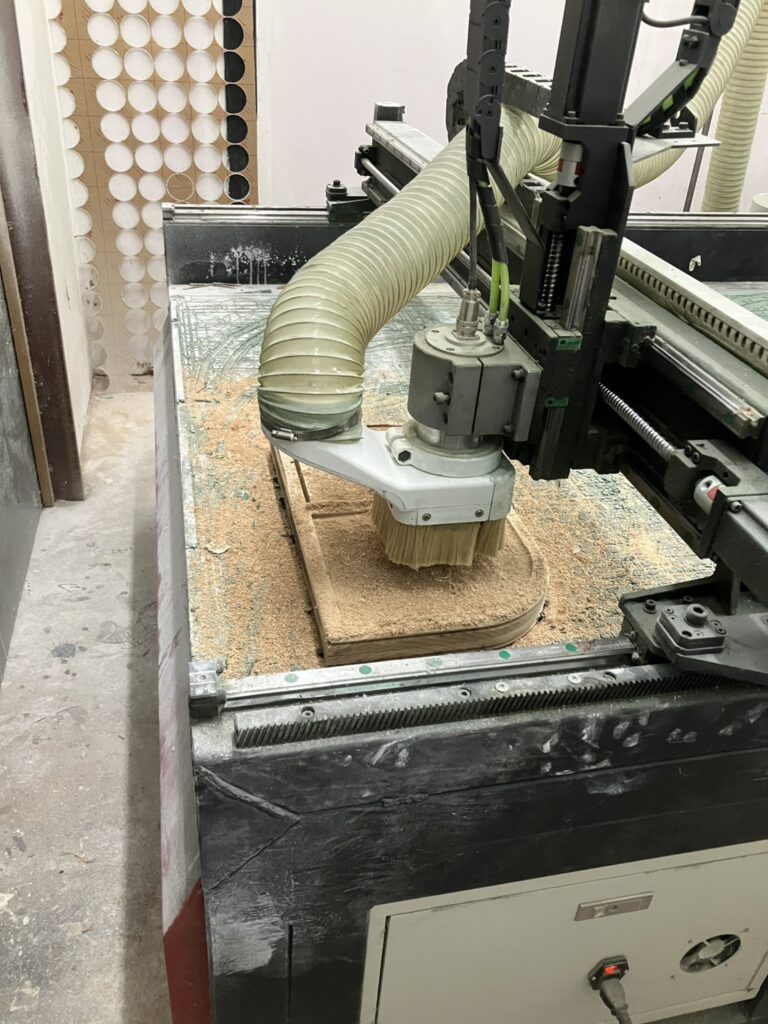
2.Material Selection: The Foundation of Quality and Durability
Material Selection: The Foundation of Quality and Durability
Materials are one of the key factors that directly impact the quality, appearance, weight, cost, and lifespan of a sculpture. Therefore, material selection must be carefully considered to suit the design of the artwork, its scale, installation location, and surrounding environment.
There are various types of materials commonly used in the production of large-scale sculptures, each possessing distinct properties and limitations.
Fiberglass (FRP)
Fiberglass is a popular material for sculptures because it is relatively lightweight compared to certain rigid materials, can be molded into complex shapes, and offers high design flexibility for surfaces and details. It is therefore ideal for sculptures requiring free-form shapes, large-scale decorative works, contemporary art, and projects where minimizing overall weight is essential.
GRC (Glassfiber Reinforced Concrete)
Glassfiber Reinforced Concrete (GRC) combines the properties of cement with specialized glass fibers to enhance load-bearing capacity and control cracking when properly designed and manufactured. This material is well-suited for architectural applications, wall decorations, sculptures requiring a concrete-like texture, and works demanding exceptional strength and robustness.
Stainless Steel and Various Metals
Metals stand out for their exceptional strength, durability, and ability to create distinctive forms—particularly in contemporary sculptures that require reflective surfaces, high gloss, or sleek, modern lines. Selecting metal requires careful consideration of the metal type, thickness, welding techniques, anti-corrosion systems, and the installation environment.
Bronze and Other Casting Materials
Bronze has a long-standing history in sculpture, renowned for its ability to capture intricate details and textures while conveying a classic, high-value aesthetic. It is ideal for works that demand exquisite craftsmanship and a unique identity.
Ultimately, choosing the right material involves more than just evaluating aesthetics; it requires a comprehensive assessment of weight, structural integrity, manufacturing methods, transportation logistics, and long-term maintenance.
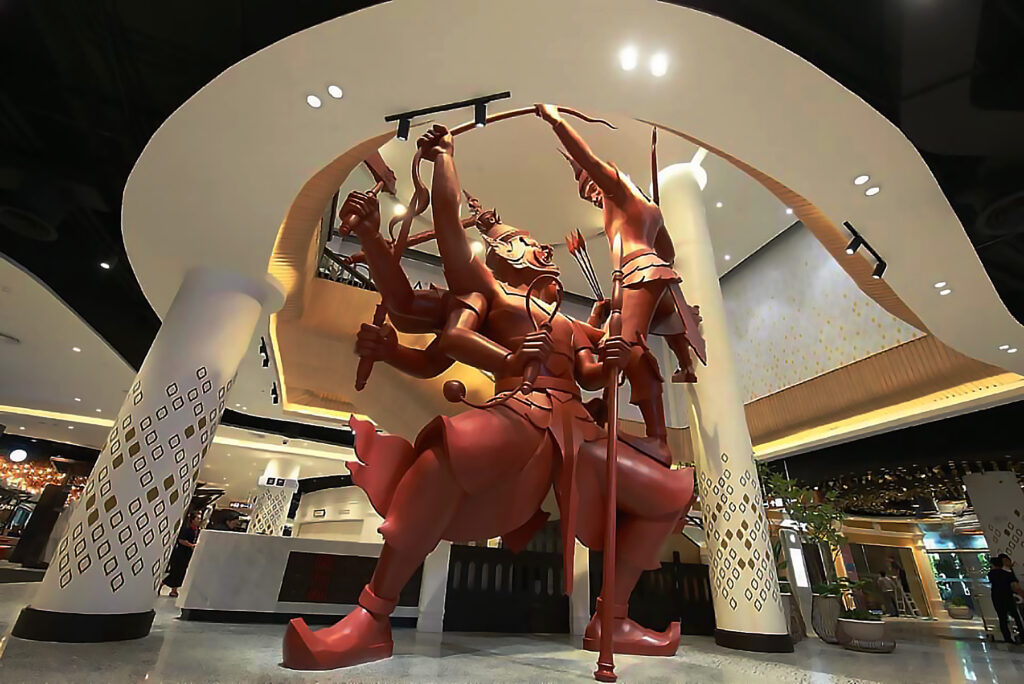
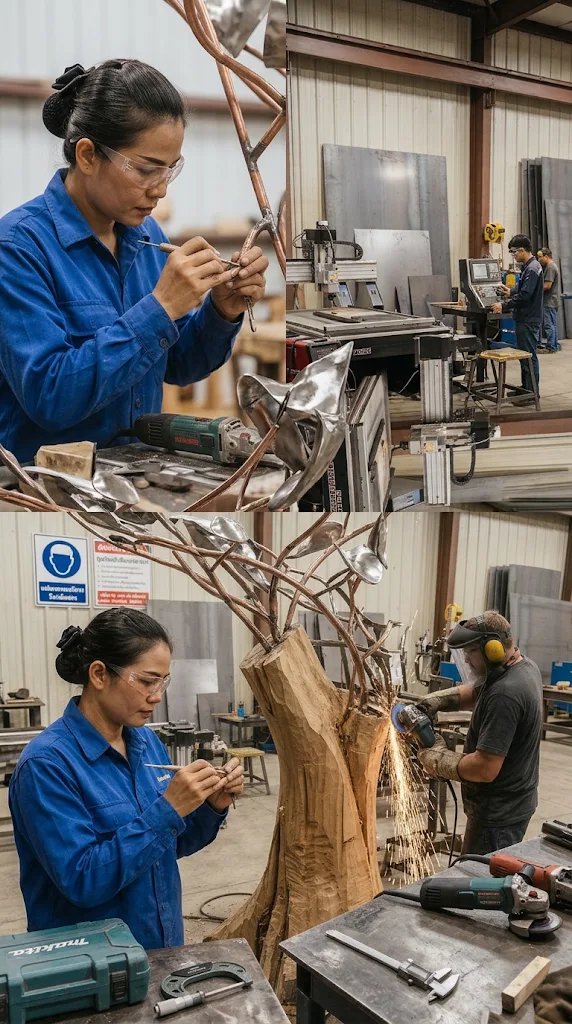
3. Structural Engineering: The Invisible Strength Behind Art
One of the greatest challenges in producing large-sacle sculptures is designing the internal structure to safely support the weight of the artwork and all external forces acting upon it throughout its lifecycle.
Even though the exterior features free-form shapes and appears to be a purely imaginative work of art, it requires an internal structural system that has been properly designed and verified. Generally, this internal structure may consist of steel frames, beams, load-bearing cores, anchor points, and support bases, all of which must be tailored to the sculpture’s scale, form, and material.
Key engineering factors that must be taken into consideration include:
Dead Load: The weight of the sculpture itself and all of its components.
Wind Load: Wind forces acting upon the surface, particularly for outdoor sculptures with large wind-catching areas.
Dynamic Effects: Impacts from vibrations or movements associated with the installation environment.
Foundation Design: Designing the foundations and anchor points to properly transfer loads down into the ground or building structure.
For sculptures standing several meters tall or featuring cantilevers extending from the main axis, force calculations and stability checks are of utmost importance. Furthermore, connection points between the internal structure and exterior materials must be meticulously designed to prevent cracking, deformation, or damage caused by the shifting of materials with differing properties.
Ultimately, Object Nine emphasizes that the success of a large-scale sculpture does not rely solely on what is visible to the eye, but rather on the engineering systems that enable the artwork to stand securely and safely.
4. Advanced Fabrication Techniques
Once the design and structural systems have been developed, the next step is the fabrication phase, which requires selecting techniques that are appropriate for the materials, shapes, and desired level of detail.
3D Modeling and Digital Fabrication
Using 3D data as a foundation allows for the systematic division of the artwork into sub-components, the determination of assembly lines, and the planning of the manufacturing process. In certain projects, CNC machining or 3D printing technologies are utilized to produce prototypes, molds, or specific parts requiring high precision.
Mold Making and Casting
For works that require reproducing shapes or feature complex surface details, mold making is a crucial process that transfers forms from the prototype to the actual artwork. Molds must be designed to suit the material type, forming method, and the direction of demolding to ensure complete detail capture and minimize damage during production.
Handcrafting and Surface Sculpting
Although digital technology enhances precision, the skills of master craftspeople remain an essential part of sculpture production—particularly for works requiring delicate touch, such as curves, free-form shapes, natural textures, and unique details.
Object Nine emphasizes that blending modern technology with exquisite craftsmanship is the key approach that endows sculptures with both technical quality and artistic value.
5.Modular Fabrication and Assembly
Many large-scale sculptures cannot be produced as a single piece due to limitations in size, weight, factory space, and transportation. Therefore, dividing the artwork into sub-components (Modular Fabrication) is a vital technique that enables the efficient production of massive structures. The division of the artwork must take into account joint placement, connection strength, transportation methods, and ease of assembly at the installation site. Each component must be clearly coded and positioned to prevent errors during assembly. Once manufacturing is complete, a trial assembly or a component fit check must be conducted as appropriate for the project to ensure that all parts connect correctly. Following assembly, inspections of the joints, surface textures, alignment lines, and form continuity are still required to ensure the finished artwork appears as a seamless, single piece of sculpture.
6. Surface Finishing: The Final Touch of Excellence
Surfaces play a significant role in influencing the feel and artistic value of a sculpture. Surface finishing is not merely the final step of production, but an integral part of the design process from the very beginning. There are various forms of surface finishing techniques, such as smooth polishing, matte finishing, multi-layer painting, spray coating, surface sealing, and creating textures that mimic natural materials. For outdoor sculptures, Object Nine selects paint systems and coatings while taking into account resistance to UV radiation, moisture, rain, temperature fluctuations, and pollution. In tropical climates like Thailand, factors such as intense sunlight and humidity are of special importance, as they can impact the color and surface of the materials over extended periods of use. Quality control of the surface must therefore encompass color consistency, neatness of joints, fineness of details, and the suitability of surface protection systems. Artworks crafted with exquisite attention to these details significantly enhance perfection and distinctively establish the unique identity of the sculpture.
7. Transportation and Installation: Bringing Art to Life
Even though the manufacturing process is fully complete, transporting the sculpture and installing it in the actual location remains a highly complex stage. Transportation must take into account the size and weight of the artwork, transport routes, vehicle height and width limitations, and protection against vibrational damage during transit. For extremely large artworks, it may be necessary to transport them in modules and assemble them on-site. Regarding installation, the team must thoroughly prepare the site, tools, lifting equipment, safety systems, and support bases. Utilizing cranes or lifting equipment requires an appropriate Lifting Plan, taking into consideration the weight, lift points, balance of the artwork, operating radius, and surrounding environment. Furthermore, anchoring points and foundation systems must be inspected to ensure they comply with approved designs prior to installation and project handover. The final step is a Final Inspection to ensure the sculpture is structurally secure, aesthetically accurate, and free from any damage incurred during transport or assembly.
8. Quality Control and Long-Term Maintenance
Large-scale sculptures are works typically designed to be displayed and utilized for many years. Quality control must therefore encompass everything from material selection to installation and post-handover maintenance. Quality inspections during production should include checking dimensions and shapes, the strength of connection points, surface quality, neatness of joints, and compliance with specified designs. For outdoor works, an appropriate maintenance plan should be in place, such as cleaning, inspecting for cracks, checking for corrosion, and evaluating the condition of paints or coatings over time. Proper maintenance not only helps extend the lifespan of the artwork but also preserves its artistic value and the aesthetic image of the location continuously.
Conclusion: When Art, Engineering, and Technology Merge as One
Behind a single large-scale sculpture lies the collaborative effort of experts across multiple fields—ranging from artists, designers, architects, engineers, and craftspeople to production and installation teams. Every single step is crucial to the quality and success of the artwork. The true challenge does not merely lie in making sculptures larger, but in preserving the beauty and original intent of the artwork while ensuring it is robust, safe, manufacturable, and harmoniously integrated with its environment. At Object Nine, we believe that great sculpture is not merely an object created to decorate a space, but a masterpiece capable of storytelling, creating experiences, and sustainably establishing a unique identity for any location.