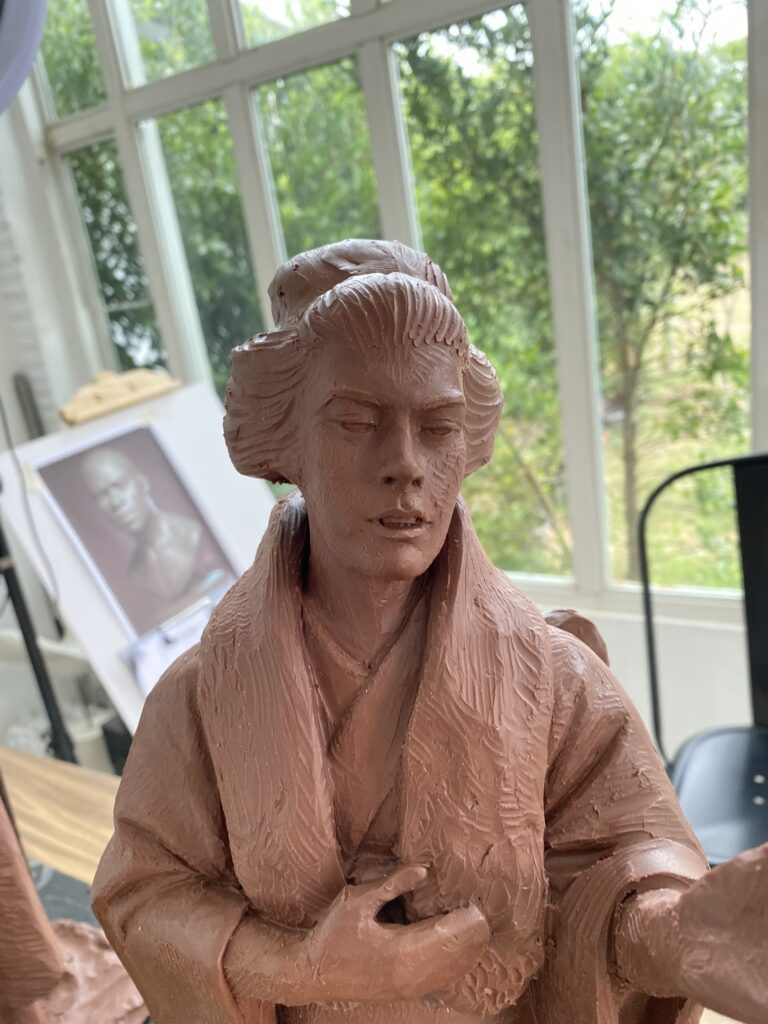
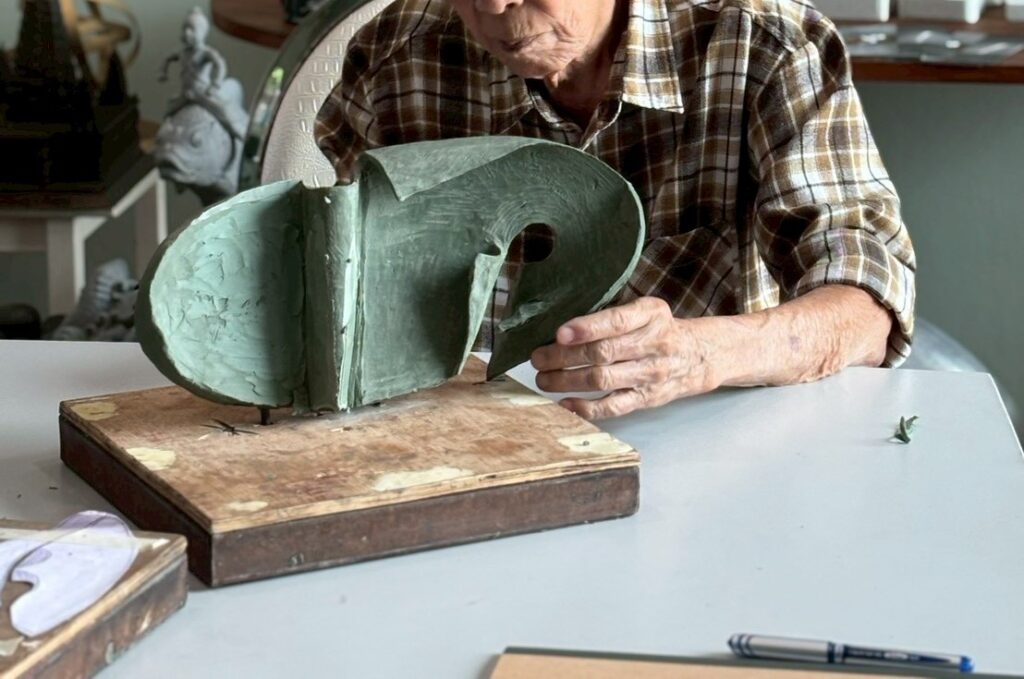
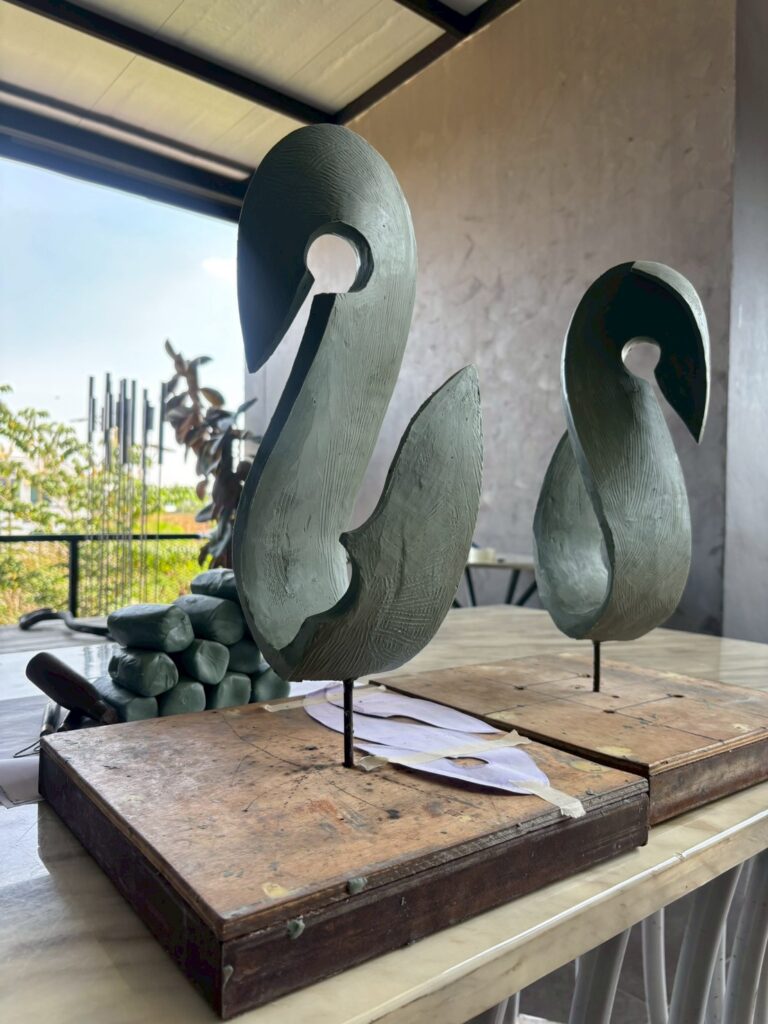
Technology vs. Traditional Craftsmanship in Contemporary Sculpture.
Today, technology is redefining the limits of sculptural art. By revolutionizing design workflows, material choices, and how works are displayed, these key innovations are reshaping the landscape of the industry.
The era of relying solely on clay maquettes is over. Today, artists utilize advanced software to achieve millimeter-level precision.
3D Sculpting: Tools like ZBrush or Blender allow artists to “sculpt” in a virtual space, enabling incredibly high-detail execution.
Generative Design: The use of AI and algorithms to assist in designing complex structures that are difficult for the human hand to calculate or replicate, such as biomimetic or organic structures.
2. Additive & Subtractive Manufacturing
These technologies rapidly bridge the gap between digital files and tangible objects.
Large-Scale 3D Printing: We can now print massive sculptures using a variety of materials, ranging from PLA and Resin to concrete or metal.
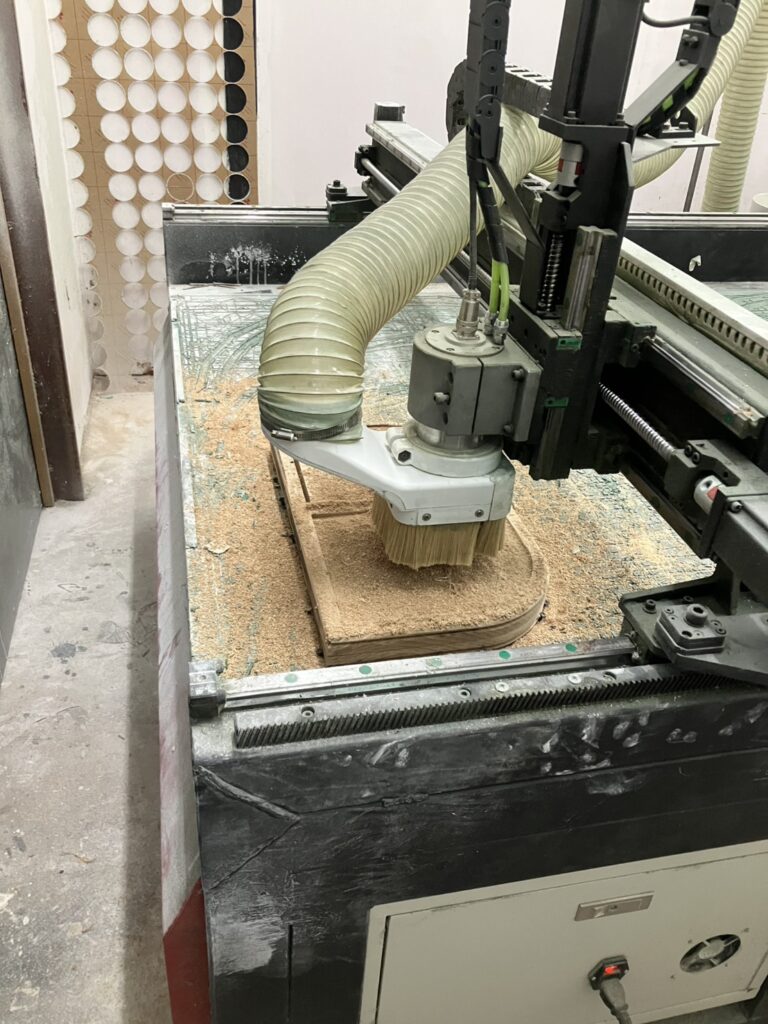
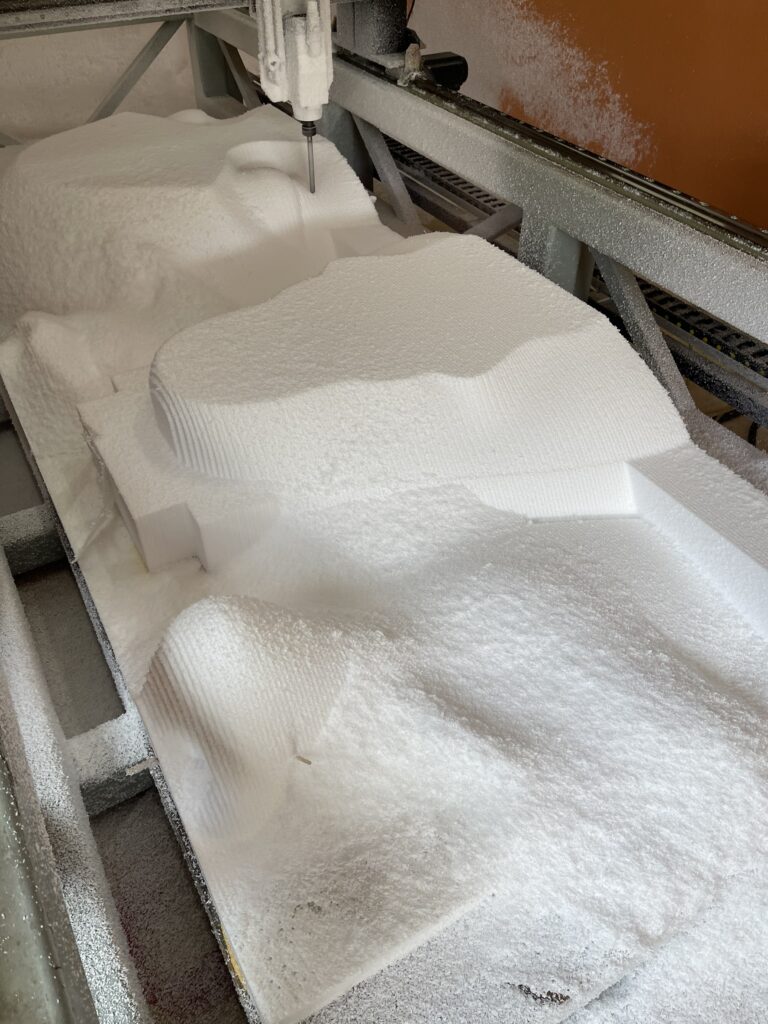
CNC Milling: Utilizing robotic arms to carve materials like marble, wood, or high-density foam based on 3D files. This allows sculptors to complete monumental works in significantly less time.
3. 3D Laser Scanning
This technology functions as a “3D photocopier.”
Digital Archiving: Preserving precious artifacts or sculptures in a high-fidelity digital format.
Scaling: Artists can hand-sculpt a small model and use 3D scanning to accurately enlarge it for large-scale public installations.
4. Advanced Materials
Technology has not only improved the tools but also the substances used to create art.
Smart Materials: Materials capable of changing color or shape in response to temperature and light.
High-Performance Alloys: The use of high-grade alloys (such as Grade 316 Stainless Steel) or composites like fiberglass—specially engineered to withstand tropical climates—ensures a longer lifespan for outdoor sculptures.
5. Virtual & Augmented Reality (AR & VR)
Transcending the limitations of “mass” and “weight.”
Augmented Reality (AR): Viewers can experience a sculpture within a real-world environment through a smartphone screen, without the physical object being present.
Virtual Reality (VR): Artists can immerse themselves in a virtual world to sculpt life-sized works around them in a full 360-degree environment.
The Hybrid Process: From Screen to Physical Reality
1. Digital Sculpting
Artists sculpt models using software such as Blender or ZBrush to define complex proportions and intricate details. In this stage, the ability to Undo/Redo is limitless, providing a significant advantage over traditional clay sculpting, where major structural changes are difficult to implement.
2. Prototyping (3D Printing)
Instead of manual scaling, we utilize 3D printing to create small-scale prototypes. This allows us to evaluate the balance, form, and light-and-shadow interplay in a real-world environment before committing to full-scale production.
3. Modern Molding (CNC Fabrication)
CNC technology can mill high-density foam into shapes based on 3D files. These serve as a Core (internal structure) or as a base for silicone molds. This process slashes the time required for “rough shaping” from several weeks to just a few days.
3. Modern Molding (CNC Fabrication)
CNC technology can mill high-density foam into shapes based on 3D files. These serve as a Core (internal structure) or as a base for silicone molds. This process slashes the time required for “rough shaping” from several weeks to just a few days.
The ultimate goal of this hybrid workflow is to harmonize the precision of technology with the soul of craftsmanship, ensuring that every sculpture is both technically perfect and artistically profound.